
Benchtop surfaces compared: laminate, engineered stone, porcelain and natural stone
Your benchtop is the hardest-working surface in your kitchen. It handles the morning rush, the school holiday cooking projects, the dinner party prep, and everything in between. Choosing the right material isn't just about looks, it's about how you actually use your kitchen, what you're prepared to maintain, and what your budget allows.
This guide covers the four main benchtop surfaces we work with at Sunday Kitchens & Living: laminate, engineered stone, porcelain (including sintered stone brands like Dekton), and natural stone. For each one, we'll cover what it is, price range, what it's genuinely good for, and where it falls short.
There's no single right answer but by the end of this post, you'll know exactly which one suits your home.
How to choose: a quick guide
| Material | Price (installed) | Heat resistance | Scratch resistance | Maintenance | Unique appearance | Best for |
|---|---|---|---|---|---|---|
| Laminate | $ | Low | Low | Very low | No | Budget renovations, rentals |
| Engineered stone | $$ | Medium | High | Very low | No | Family kitchens |
| Porcelain / Dekton | $$$ | Very high | Very high | Very low | No | Premium, high-heat kitchens |
| Natural stone | $$$–$$$$ | High (granite) Low (marble) |
High (granite) Low (marble) |
Moderate–high | Yes | Luxury, statement pieces |
Pricing tiers are a general guide only. Visit our showroom at the Homemaker Centre, Prospect for an accurate quote based on your kitchen.
1. Laminate benchtops
What it is
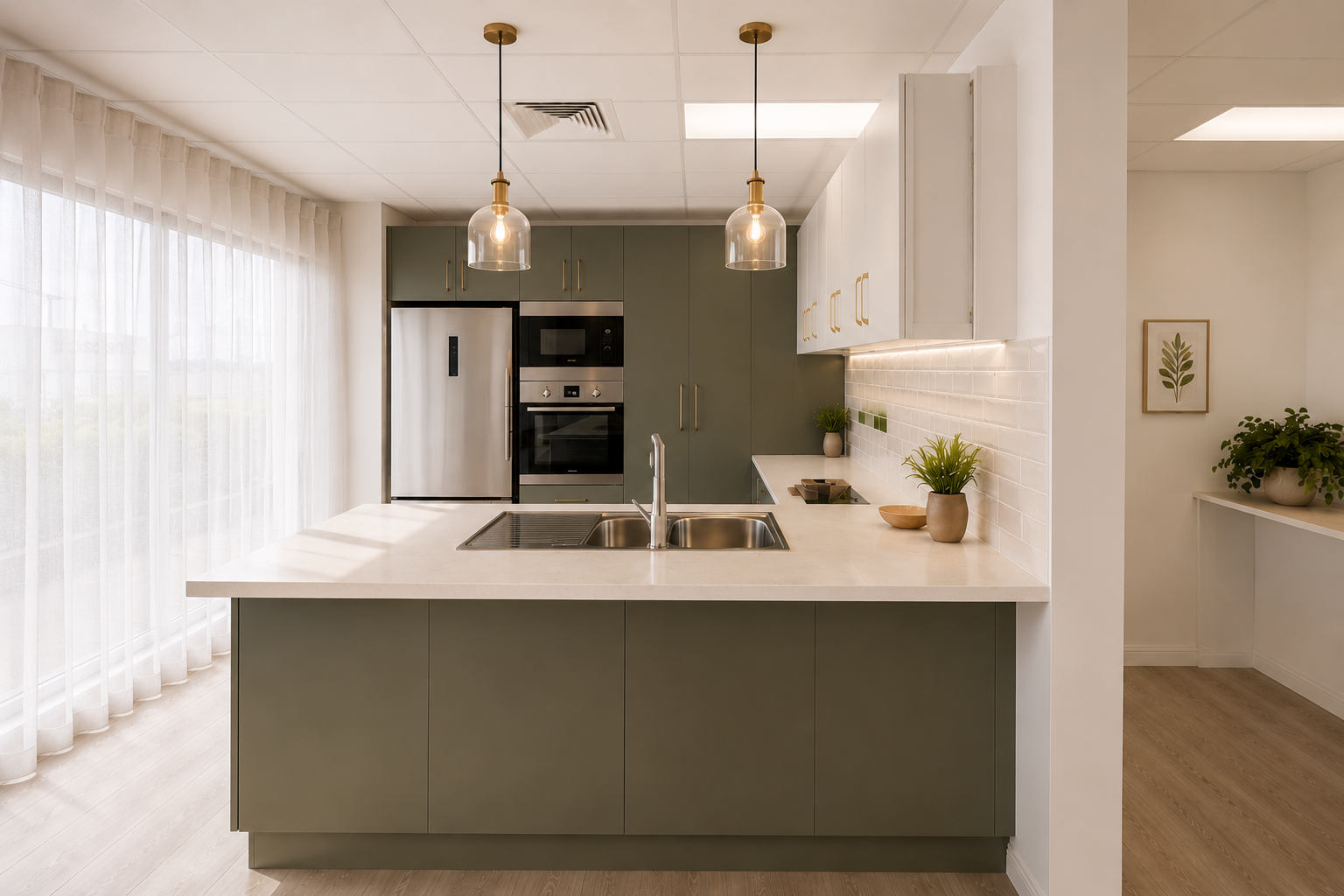
Laminate is made by bonding decorative paper and resin layers to a particleboard or MDF core. Modern laminates, including the Formica range we use at Sunday Kitchens & Living have come a long way from the dated versions of the past. Today's finishes convincingly replicate stone, timber, and concrete at a fraction of the cost.
What it costs
Laminate benchtops are typically charged per linear metre installed and are the most budget-friendly option on the market. For an average Western Sydney kitchen, expect to pay $1,500–$3,500 for the benchtop component in total.
Best for
Budget-conscious renovations where funds are better spent elsewhere (cabinetry, appliances)
Investment properties and rentals
Large kitchens where stone would be prohibitively expensive
Families who want a practical, low-maintenance surface without a premium price tag
The honest drawbacks
Laminate is not heat-resistant, put a hot pan directly on it and you'll leave a permanent mark. It's also prone to scratching and chipping at the edges over time, and damage generally can't be repaired, the section typically needs replacing. It also doesn't add the same perceived value to a home as stone at resale.
Our verdict
Laminate is an excellent choice when budget is the priority. Done well, with quality brands like Formica and Polytec, and a good colour selection it looks far more expensive than it is, and it performs reliably for everyday use with basic care.
2. Engineered stone (Caesarstone, Quantum Quartz)
What it is
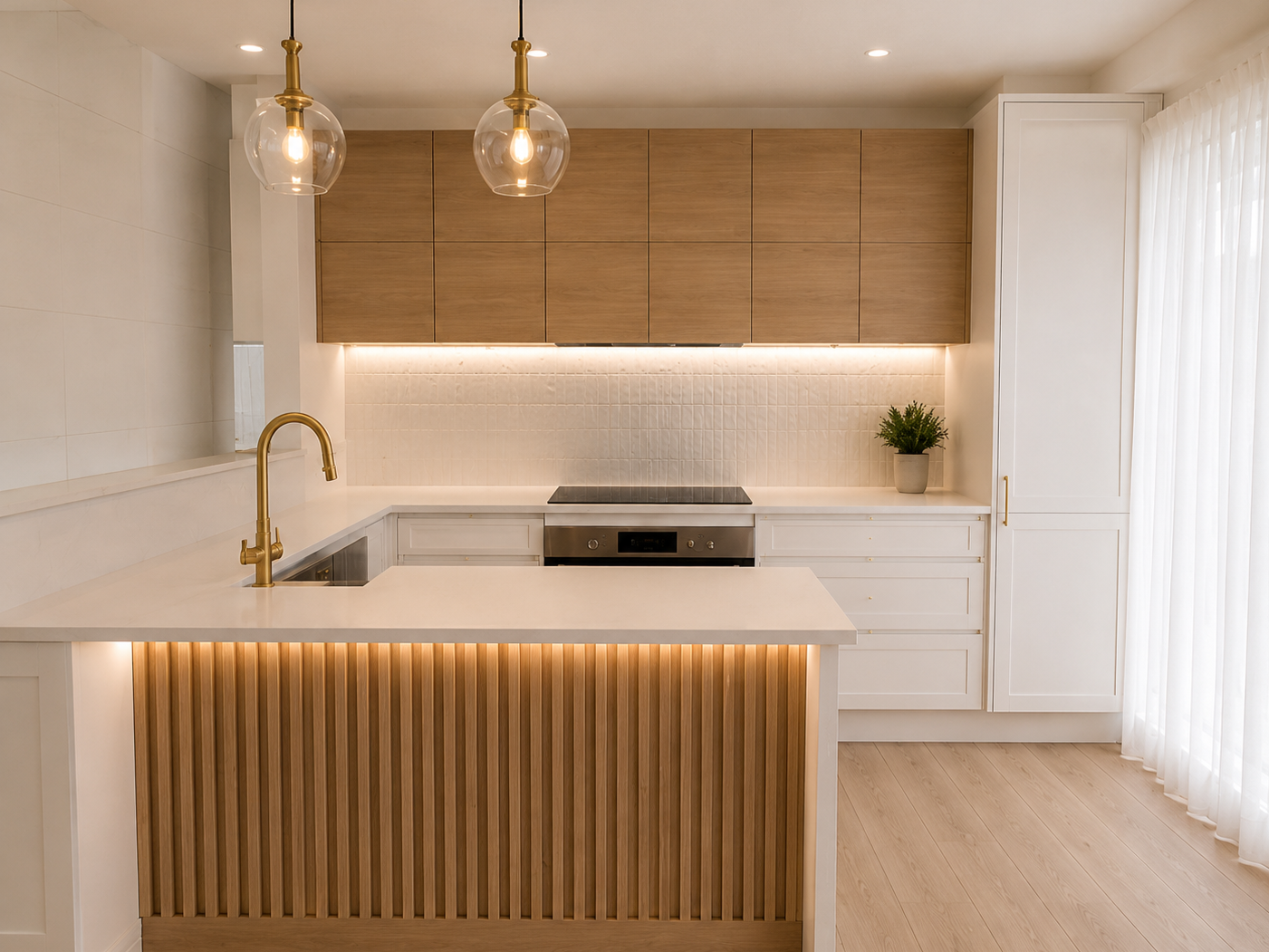
Engineered stone is manufactured from crushed natural quartz or granite bound together with polymer resin. The result is a dense, non-porous surface with a consistent colour and finish across the entire slab. Brands like Caesarstone and Quantum Quartz, both available through our showroom, offer extensive ranges covering everything from pure whites and soft creams through to deep charcoals and dramatic vein patterns.
What it costs
Engineered stone benchtops in Australia are charged per square metre or by the slab, with total installed costs for an average kitchen generally falling between $5,000 and $20,000. Premium ranges and thicker slabs (40mm vs 20mm) sit at the higher end.
Best for
Family kitchens that need a durable, hygienic surface day in, day out
Homeowners who want a stone look without the maintenance of natural stone
Kitchens with islands or large benchtop runs where consistent colour matters
Anyone who wants to avoid sealing and ongoing upkeep
The honest drawbacks
Engineered stone is not fully heat-resistant, prolonged direct contact with hot pans can cause discolouration or cracking, so trivets are recommended. Edge chips are possible from heavy impact. And you need to ensure any product you select is compliant with Australia's 2024 silica regulations - reputable brands like Caesarstone and Quantum Quartz have already transitioned their ranges.
Our verdict
Engineered stone remains the most popular benchtop choice for Western Sydney families, and for good reason. It hits the sweet spot of durability, low maintenance, visual appeal, and value. The Caesarstone and Quantum Quartz ranges give you an enormous amount of design flexibility, and the new compliant products are as good as anything that came before them.
3. Porcelain and sintered stone
What it is
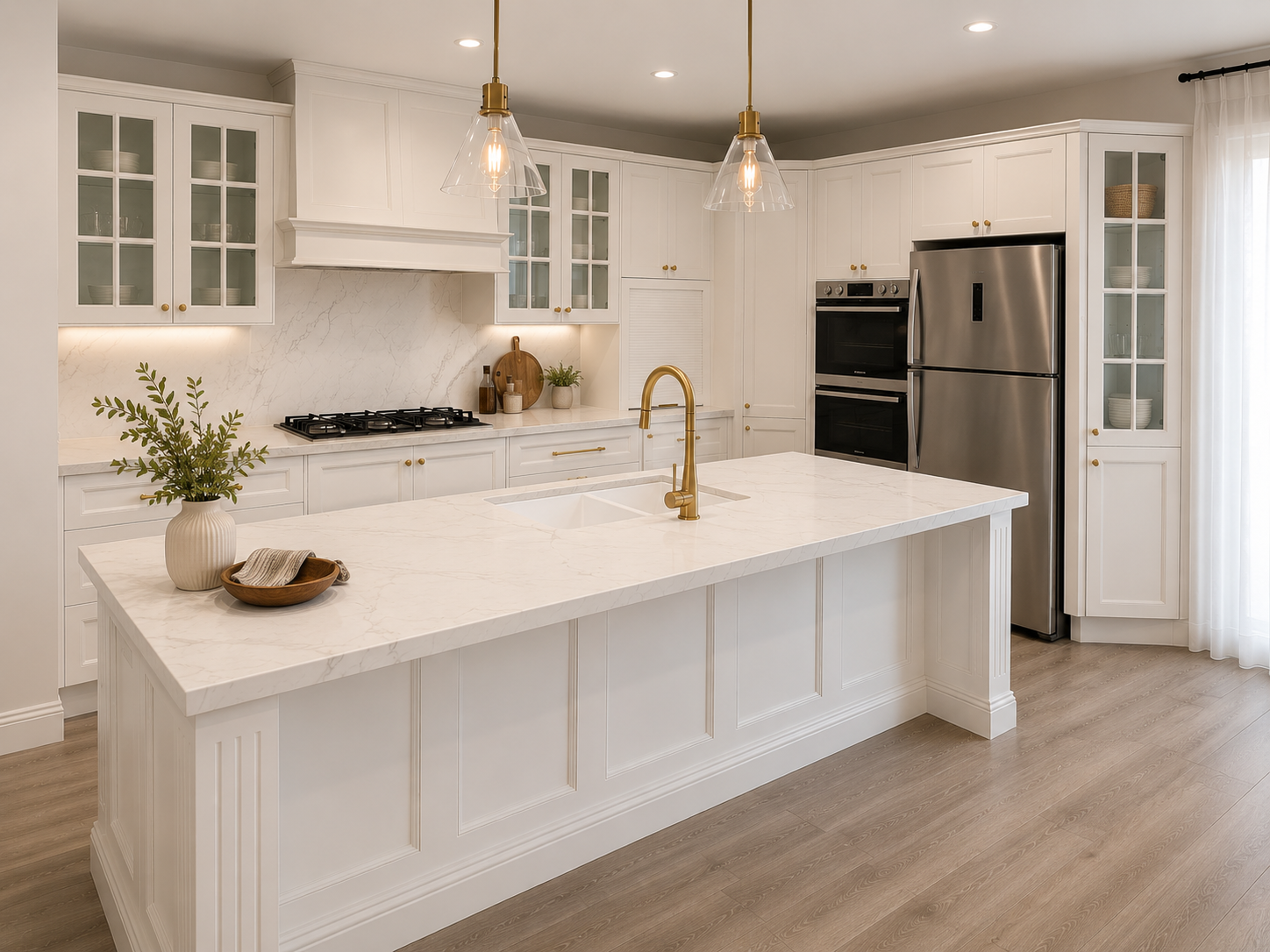
Porcelain benchtops, and sintered stone products like Dekton by Cosentino are made from a blend of powdered clay, minerals and pigments compressed and fired at extremely high temperatures. The result is an ultra-dense, non-porous surface that is harder and more heat-resistant than almost anything else in the market. Dekton in particular is available in very thin profiles (12mm), which gives a sleek, contemporary look.
What it costs
Porcelain and sintered stone benchtops is charged per linear metre installed, depending on thickness, pattern, edge detailing and cut-outs. It’s a premium option so expect to invest $6,000–$14,000+ for the benchtop component of an average kitchen.
Best for
Design-forward kitchens where the benchtop is a statement feature
Families who cook seriously and want a surface that handles heat without compromise
Outdoor kitchens or alfresco entertaining spaces (porcelain is UV-stable, unlike engineered stone)
Homeowners who want absolute minimum maintenance
The honest drawbacks
Porcelain requires specialist fabricators and installers, not every stonemason works with it. Because it is so hard and dense, it requires special tools to cut, and stonemasons comfortable with engineered stone are not necessarily experienced cutting porcelain. This specialist labour is reflected in the installation cost. Porcelain is also more brittle during the fabrication and transport process,slabs can crack if handled incorrectly, which is why who you work with matters.
Our verdict
Dekton and porcelain are the premium, future-proof choice for serious kitchens. If you want a surface that can handle a hot pan directly, looks stunning in a thin-edge profile, and requires almost zero ongoing maintenance, this is it. The investment is higher, but so is the result.
4. Natural stone (granite and marble)
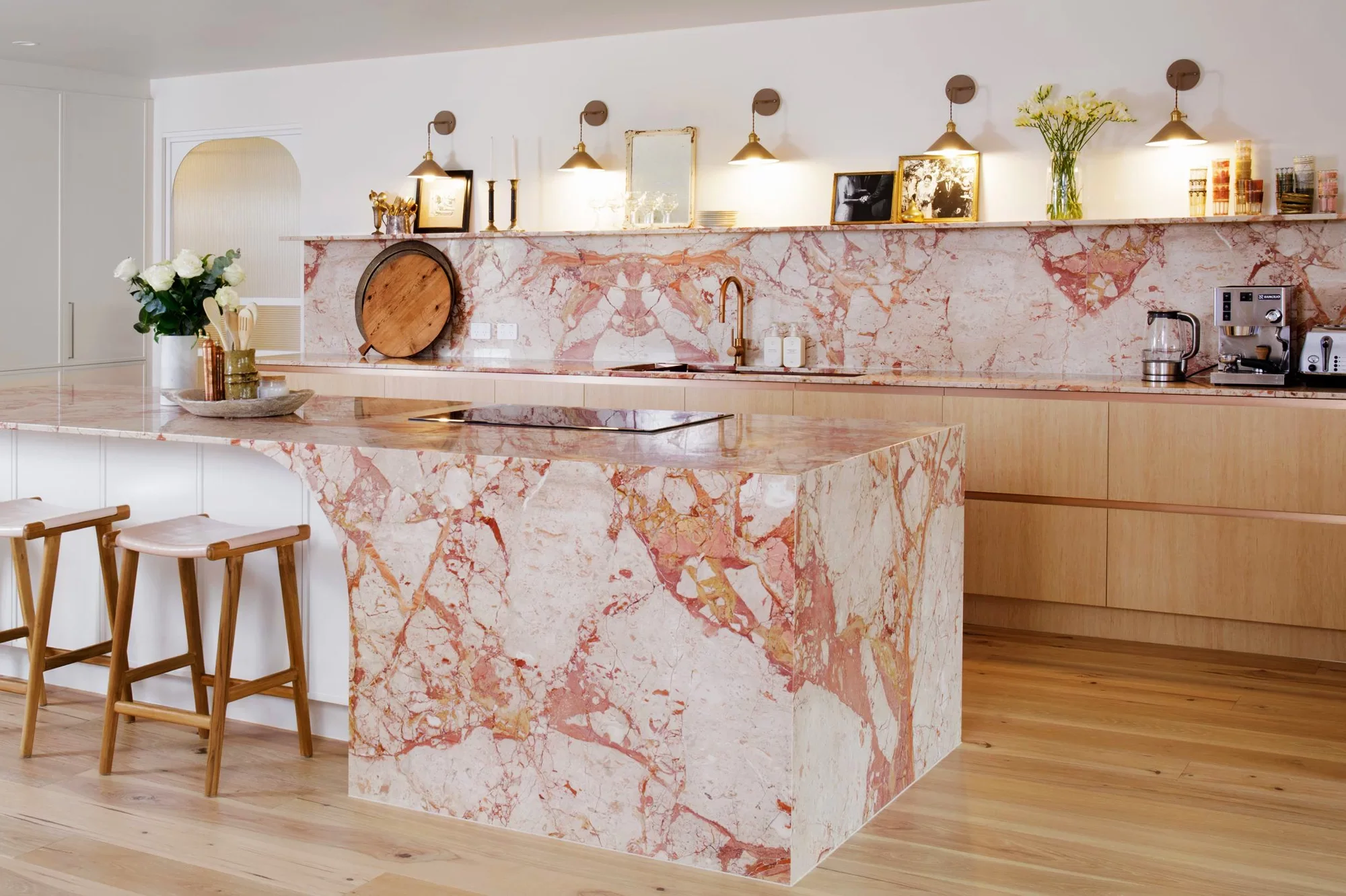
Image courtesy of Wood, Marble and White
What it is
Natural stone benchtops are cut directly from quarried slabs of granite, marble, or other natural stone. Every slab is completely unique, the veining, patterning and colouring found in nature can't be replicated, which is a significant part of their appeal. Granite is extremely hard and dense; marble is softer and more luxurious in appearance.
What it costs
Natural stone benchtops are the most at the most premium end of the scale, depending on the stone type and quality. For a full kitchen, that typically puts natural stone in the $20,000–$40,000+ range for the benchtop component. Marble sits at the higher end of this range; granite tends to be slightly more accessible.
Best for
Premium or luxury kitchen renovations where budget is secondary to beauty
Statement pieces, particularly marble islands paired with engineered stone or laminate back benchtops
Homeowners who value the uniqueness and natural character of each slab
Granite specifically: high-traffic kitchens that need maximum scratch and heat resistance
The honest drawbacks
Natural stone requires more care than any other material on this list. Marble and granite must be sealed every 12 months to prevent staining, with sealing costs typically ranging from $20 to $50 per square metre. Marble in particular is softer and more porous than granite, making it prone to scratching and staining from acidic substances like lemon juice, vinegar and coffee. It's a genuinely beautiful material, but it rewards homeowners who are prepared to treat it properly.
Our verdict
Natural stone is the most visually spectacular option and the only material that gives you something truly one of a kind. For the right kitchen and the right client, nothing else comes close. A marble island paired with a more practical surface on the perimeter benchtops is a popular way to get that wow factor while keeping the overall cost and maintenance burden in check.
Come and see them in person
Reading about benchtop materials is one thing, but the real test is seeing and touching them in real life.
At our showroom at the Homemaker Centre in Prospect, we have a range of benchtop surfaces on display and our team can walk you through the options that suit your specific kitchen, lifestyle and budget. No appointment needed, come in any time.
Or if you'd prefer, book a free design consultation and we'll come to you.
